

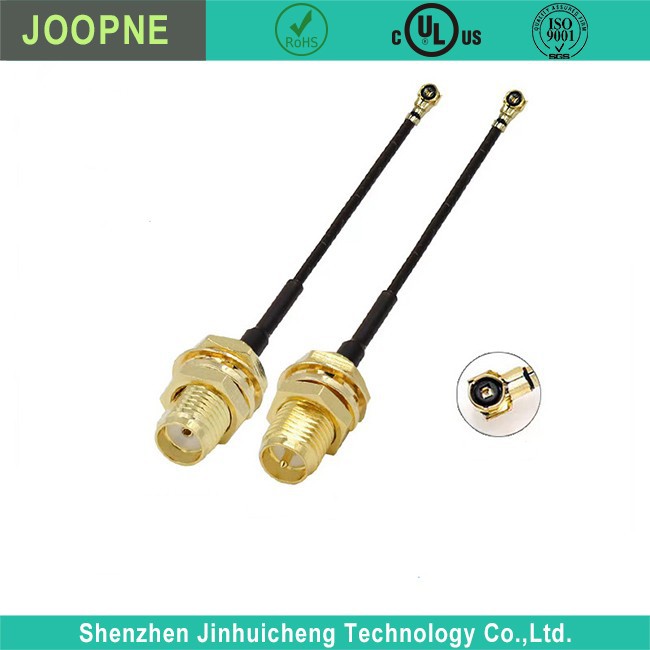

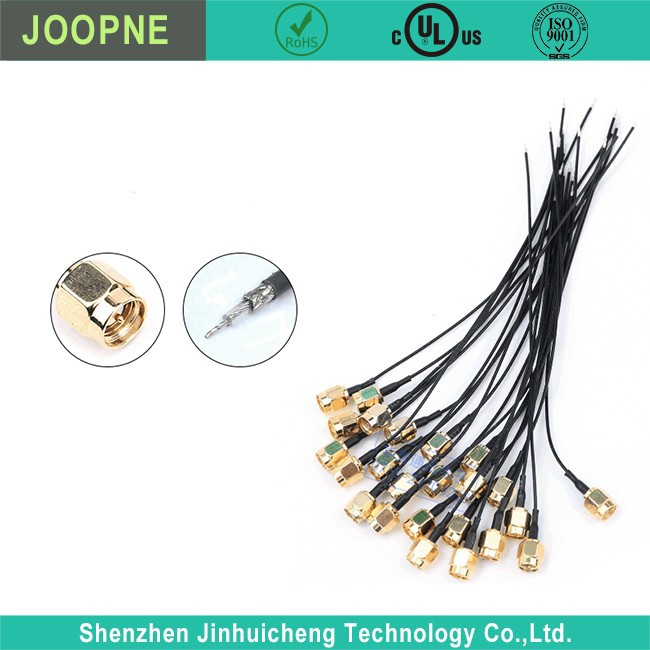
RF Cable
RF cables, or Radio Frequency cables, are used to transmit high-frequency signals in various electronic systems, such as telecommunications, broadcasting, wireless devices, and more.
Product Introduction
RF cables, or Radio Frequency cables, are used to transmit high-frequency signals in various electronic systems, such as telecommunications, broadcasting, wireless devices, and more. These cables are designed to carry radio frequency signals without significant losses or interference. They come in different types, each suited for specific applications and frequencies.
Some key points about RF cables
Types of RF Cables:
Coaxial Cables: Commonly used for RF transmission, coaxial cables consist of an inner conductor, dielectric insulator, and an outer conductor shield. They provide excellent shielding against interference and are suitable for various frequency ranges.
Twin Lead Cables: Consist of two parallel wires separated by an insulating material, mainly used in lower frequency applications.
Waveguide: Used at microwave frequencies for efficient transmission of high-power signals with low loss.
Coaxial Cable Varieties:
RG6 and RG59: These are standard coaxial cables often used for cable TV, satellite TV, and some data communication applications.
LMR (Lightweight, Multipurpose, Radiating): These cables are more flexible and suitable for mobile or portable applications.
Low-Loss Cables: These cables are designed for applications where signal loss must be minimized over long distances, commonly used in cellular networks or long-range wireless systems.
Connector Types:
Different connectors are used for RF cables depending on the application. Common types include SMA, BNC, N-type, F-type, and TNC connectors, among others. The choice of connector depends on factors like frequency, impedance, and application requirements.
Frequency Range and Impedance:
RF cables are rated for specific frequency ranges and impedance values. It’s crucial to select the appropriate cable that matches the frequency of the signals being transmitted and the impedance requirements of the devices connected.
Shielding and Signal Integrity:
RF cables are designed with shielding to minimize signal interference and ensure proper signal integrity, especially in high-frequency applications where signal degradation can occur.
Applications
RF cables are used in a wide range of applications, including telecommunications, Wi-Fi routers, cellular networks, GPS devices, radar systems, broadcast equipment, and many more.
When selecting an RF cable, it’s essential to consider factors such as the frequency range, power handling capability, environmental conditions, and compatibility with the devices being connected. RF cables are available from various electronic component suppliers, and the choice should be based on the specific requirements of the application.
We do custom in various sizes, colors, lengths for RF Cable.
Product Qualification
The cable comes in many different sizes to help you get the length you need. The cables are available in different lengths like 0.3m, 0.9m, 1.8m, 3m, 3.6m, 4.6m and 7.6m or others as your request.





Hot Tags: rf cable, China rf cable manufacturers, suppliers, factory, iron replacement cord, eu plug to c13, flat extension cord australia, jump start cord, usb fpc, power cables australia


Send Inquiry
