Cable Assembly
1.Features of Cable Assembly
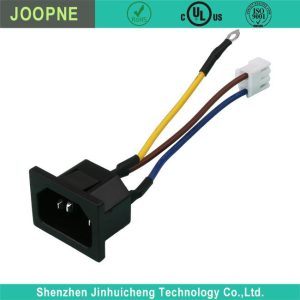
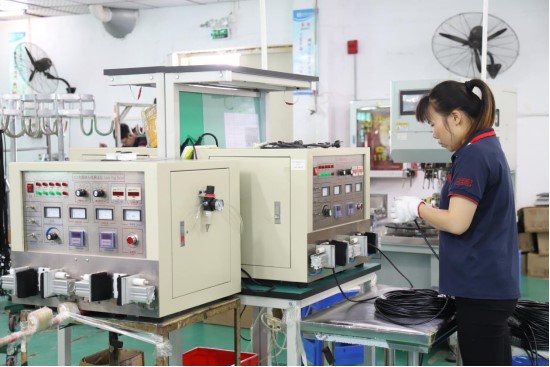
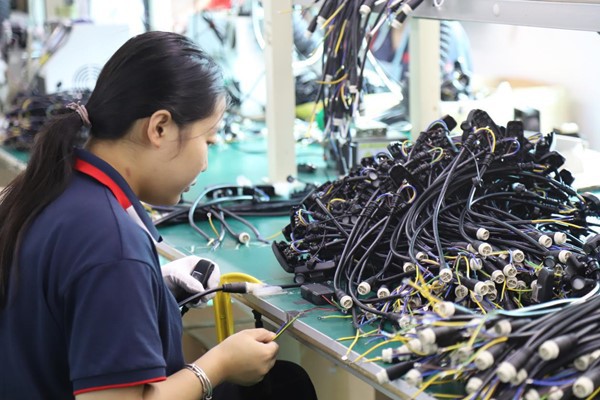
A typical cable assembly usually includes wires or cables (for electrical or signal transmission), connectors at the cable ends, and a form of insulation to safeguard the cables against moisture or heat and for health and safety reasons. A sheath or jacket envelops the entire assembly, which provides an additional layer of protection. Wire color coding is also usually used to help with wire identification. Cable assemblies are made following some general steps. First, wires are cut to the desired length using specialized wire-cutting machines. Then, the wire ends are stripped to expose their cores. Next, the wires are fitted to the required terminals or connector housings, each with distinct sizes and specifications. Finally, the wires are assembled into a harness, using a workbench or assembly board configured to adhere to design specifications. Wire assemblies can either be made by hand or by machine. Each method requires a series of steps, or processes, to achieve the desired cable assembly. This includes routing and then inserting wires through sleeves, crimping terminals, taping wires, and fastening strands with clamps, tape, or cable ties.
2.Uses of Cable Assembly
Cable assemblies have a wide range of uses in different industries. They are used anywhere where a group of cables are needed for a single connection. These assemblies can be used to transmit either electricity or signal. Some of their common uses include: flat panel displays, navigation systems, computers, telecommunication applications, LEDs, electronics, drones, automobiles, airplanes, and more. Cable assemblies are typically used whenever electronic hardware is involved. They serve three primary functions. Firstly, they protect technicians and contractors by encasing the wiring bundle in a durable sheath made of materials like shrink-wrapped thermoplastic, rubber, or vinyl. This safeguards against potential hazards from electrical currents, ensuring the safety of bystanders. Secondly, wire harnesses within cable assemblies facilitate easy navigation of electrical systems, maintaining a highly organized wiring configuration. Lastly, cable assemblies act as a protective barrier for the wires and cables within their sheaths, shielding them from wear and tear, harsh environmental conditions, and other incidental damage.
3.Common Types of Cable Assembly
There are many different cable assembly types. Some common ones are discussed below:
*Molded Cable Assemblies
Molded cable assemblies, or overmolds, have their connectors and wires combined into a single component. The cable assembly is put into a mold, and molten plastic is then injected into the mold cavity. It is then allowed to cool and turn solid. The result is an encapsulated junction of the wire and connector. Some of the benefits of this type of assembly include: good flexural strength at the spot at which most of the connector and cable movements take place, and good resistance against shock, impact, and abrasion. This design can incorporate a waterproof element, and it also helps with installation. Molded cable assemblies are used in applications that require a more finished and durable appearance.
*Computer Cable Assemblies
Computer cable assemblies are those used within computers and between computers and their accessories. There are numerous types of computer cable accessories, such as Serial ATA (SATA) cables, VGA cables, and USB cables. SATA cable assemblies are used for connecting storage devices and computer motherboards. Typically, they have 8-pin connectors and provide high data transfer speeds. VGA cables connect computers to monitors, and feature 15-pin connectors in three rows which correspond to RGB channels. USB cables are perhaps the most well-known computer cable assembly and are used to connect many different types of accessories to computers. USB Type-A cable assemblies have connectors with four connection points that are used for power and data transfer.
*Flat Ribbon Cable Assemblies
As the name suggests, flat ribbon cable, or ribbon cable, assemblies have the appearance of a flat ribbon. They consist of a row of parallel wires that are neatly placed next to each other in a ribbon-like shape. The shape of these cable assemblies makes them ideal for confined spaces, especially where width is a key design factor. Flat ribbon cable assemblies come in split, multi-branch, non-PVC, and other types. These assemblies allow mass termination using insulation-displacement connectors (IDC) with sharp, forked contacts. IDC with ribbon cables is a wiring solution featuring a flat multiconductor cable paired with an Insulation-Displacement Connector (IDC). This connector is designed to pierce through insulation, establishing electrical connections with the conductors through sharp blades. They are cost-effective, easy to use, and high-density, and are easy to identify and maintain. While round cables are now preferred for external and internal connections, ribbon cables remain advantageous, particularly in space-constrained scenarios.
*Telecommunication Cable Assemblies
Different cable assemblies apply to the telecommunication sector. Two common examples of cable assemblies used in the telecommunication industry include fiber-optic cables and D-sub cable assemblies. D-subminiature connectors, originally designed as compact alternatives for use with electronic devices, are widely used in computer and telecommunications applications. Available in various configurations like: 9-pin, 15-pin, 25-pin, and 37-pin, with higher-density options for complex systems, D-sub cables commonly use thumbscrew locking mechanisms for secure connections, even under harsh conditions. Made of metal, the thumbscrew usually features a knurled surface for easy gripping and manual turning. The threaded shaft of the thumbscrew is inserted through a hole in one component and subsequently screwed into a threaded hole on the other, effectively securing the two components together. D-sub cables are cost-effective for high-density connectors. This is because of their ease of manufacturing and widespread availability in various pin counts and configurations. Their shielded wire also ensures reliable signal transmission.
*Networking and General Communication Cable Assemblies
Networking and general communication cable assemblies are cable assemblies used for creating a network of systems or computers, and generally facilitating communication. The most prevalent networking cable assemblies are Ethernet cables, with the Category 5e (Cat5e) cable being the most common. Cat5e cables contain four pairs of copper wires. The eight wires are individually wrapped in a protective sheath, with a single thermoplastic sheath covering the group of wires.
*Multicore Assembly
Multicore cable assemblies contain more than one usable signal or feed in a single core assembly. These assemblies are useful whenever a combination of feeds is needed in a single assembly. CCTV cable assemblies are an example of multicore assemblies, which combine signal and power in coaxial cables, to provide power and connectivity to CCTV cameras. Another example is the audio multicore cable which transmits multiple analog audio signals in a single cable assembly.
*Audio/visual (AV) Cable Assemblies
AV cable assemblies are designed and used to transmit audio and video signals. These assemblies typically include multiple conductors or wires, each dedicated to carrying specific signals, and they are often enclosed within a protective sheath. Examples of audio/visual cable assemblies include High-Definition Multimedia Interface (HDMI) cables, Video Graphics Array (VGA) cables, RCA cables, and other similar configurations. These cables are typically used in home entertainment systems (e.g., TVs), multimedia applications, and professional audio/video setups.
*RFI/EMI Shielded Cable Assemblies
Electromagnetic interference (EMI) and Radio frequency interference (RFI) shielded cable assemblies are cable assemblies that contain specialized shielding to protect against EMI or RFI. The shielding in these assemblies consists of a thin layer of aluminum, called foil, or a mesh of copper wires, called braiding, that cover the internal group of wires in a layer underneath the protective plastic sheath. Shielded cable assemblies protect against EMI and RFI, which cause noise and signal corruption. They are used in applications in which signal purity is needed, such as in security systems, audio cabling, and visual cables.
*Military Grade Cable Assemblies
Military-grade cable assemblies are designed to meet the rigorous demands of military and aerospace applications. These assemblies are used in different military systems, including aerospace equipment, field communication links, and marine equipment. An example of a cable assembly found in the military setting is the circular connector cable assembly. These military cable assemblies offer robust durability and secure connections resistant to contaminants, EMI, impact damage, moisture, and vibration. These assemblies accommodate multiple pins for power and data transmission. They are available in various gauges, materials, and designs, and they simplify maintenance with easy connection and disconnection. Circular cable assemblies are constructed from resilient materials like stainless steel, aluminum, and plastic. They resist corrosion, while waterproof versions enhance protection through advanced sealing technologies. They maintain a watertight seal even under high-pressure water exposure, thanks to advanced sealing technologies such as gaskets and O-rings. Waterproof circular connector cables are specifically engineered to ensure reliable and secure connections in challenging environments, safeguarding electrical systems from water, dust, and contaminants.