
Top 10 Ways to Improve Wire Harness Manufacturing
Jan 17, 2024
We describe engineered solutions that help wire harness manufacturers overcome some of the pressing business challenges they face. In an industry where manual engineering methods are still largely dominant, we explain how innovative approaches can significantly reduce the time and cost of wire harness design cycles, improve product and process quality, and reduce both manufacturing turnaround time and costs. With tight margins and high volumes, increased efficiency, reduced costs, and shorter production times can have a substantial impact on profitability and long-term business sustainability. Read on to learn how solutions that leverage advanced automation, data consistency, and robust integrations can accomplish this.
Introduction
Discovering errors late in the product or manufacturing engineering process can lead to time delays, resulting in slower quote turnaround times and lost opportunities to bid for new business. Engineering changes can be equally problematic. Small changes to the specifications of a manufacturing module or subassembly can have a large impact on material costs, supply chain management, and manufacturing process efficiency.
These challenges are further exacerbated by the prevalence of disjointed engineering and manufacturing systems. As the complexity of exploitation increases, these legacy approaches will come under increasing pressure and may eventually fail entirely.
Fortunately, a new generation of electrical systems and wire harness engineering tools can help companies-large and small-meet these new challenges. With increased automation, these tools enable engineers to quickly create drawings, calculations, work instructions, and other required documentation and outputs, thereby reducing time to quote and providing superior service and responsiveness to customers. Furthermore, these new solutions offer robust integration with tools from other domains and parts of the engineering process, ensuring better collaboration during the development cycle and reducing errors in data exchange.
Here are 10 ways to solve
Engineered solutions can help wire harness manufacturers
Reduces wire harness design cycle time and cost
1. Automate Utilization Engineering and Validation:
Bill of Materials (BOM) creation can be streamlined by eliminating manual processes. The new tool includes automated engineering capabilities that calculate wire lengths, splice locations, tape quantities, and more, and then apply the appropriate wire types, multicores, terminals, and other elements based on rules defined by engineers. Design Rule Checking (DRC) is then used to verify and ensure that the final design complies with defined best practices.

2. Simplify Component Production Design:
The design of product components is another manual process in traditional methods that can be frustrating and time-consuming. Today's electrical and electronic (E/E) systems and wire harness engineering solutions feature production module allocation algorithms that identify and configure manufacturing sub-module components. These algorithms use predefined best practice rules and constraints to allocate production modules, thereby increasing manufacturing efficiency and reducing costs.
3. Controlled, Automated Change Management:
In the electromechanical system and wire harness engineering process, managing engineering changes is a persistent challenge. With strong data integrity and automation, modern software solutions make change management faster, easier, and less error-prone. Approved design changes are integrated into the existing harness design, preserving details added during earlier design stages. Users can create multiple change policies to control how the tool responds to changes and ensure that manufacturing data added in earlier design iterations is retained as the design matures and changes are made. The system automatically assesses the impact of design changes and provides intuitive output that can be used to verify that the changes have been implemented as expected.
4. Digital Continuity of Design Through Production:
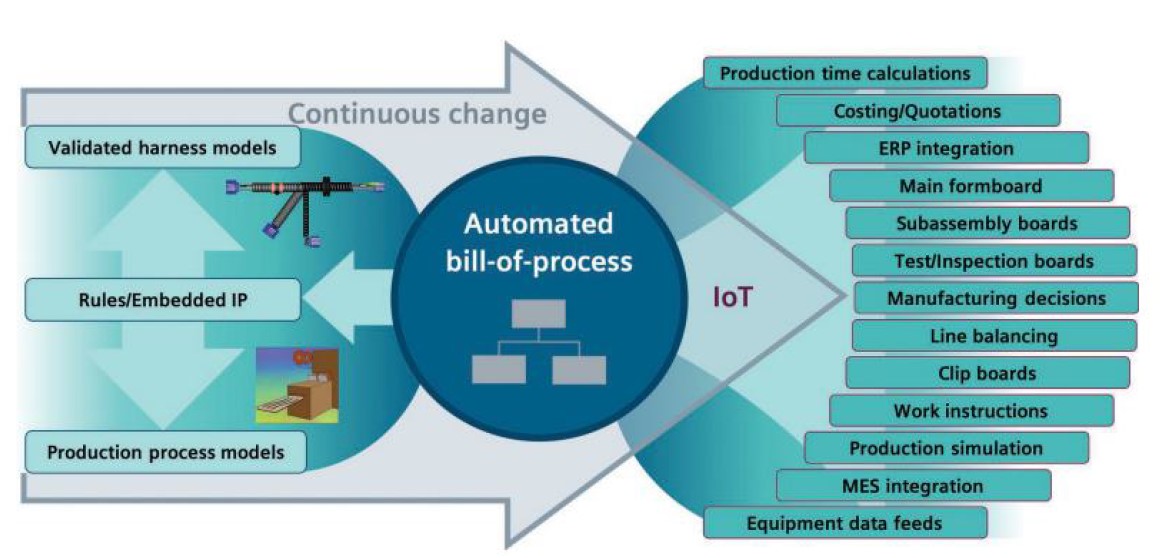
Traditional E/E systems and wire harness engineering processes create silos that prevent collaboration and hinder data sharing throughout the engineering process. The rich data model of modern solutions supports digital continuity for every design and manufacturing process (Figure 1). Data from the design environment flows directly into the management production environment, eliminating duplicate data entry. Changes can flow automatically, while robust automation also helps ensure the correct export of construction design and manufacturing engineering to production.
Reduce wire harness manufacturing turnaround time and costs
5. Full-Size Formwork Board Layout and Fixtures:
As manufacturing drawings become outdated, discrepancies may occur between the design intent and the physical parts. These anomalies lead to wasted material and delayed production, which in turn increases costs. The new solution allows you to generate full-size diagrams directly from the engineering environment. Engineering changes made in one diagram automatically update related diagrams, eliminating a common source of error. Additionally, fixtures and other manufacturing elements can be selected and placed interactively or using rules-based automation to ensure best-practice manufacturing engineering.
6. Effective Formwork Utilization:
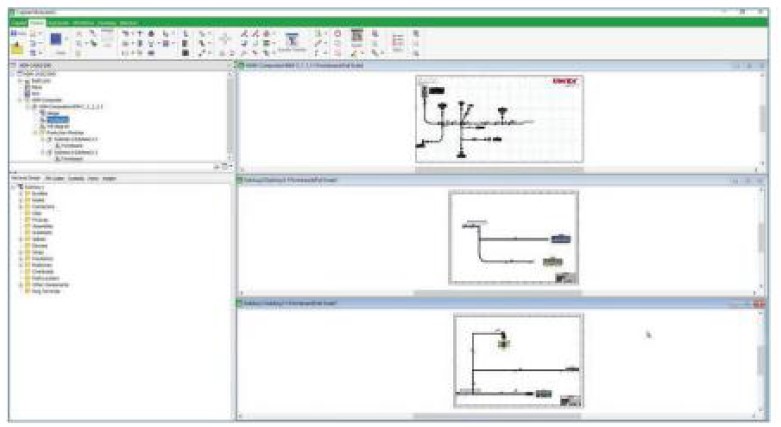
Well-designed formwork enables manufacturing engineers to build more efficient production lines. Today's best solutions support the creation and maintenance of merged or combined format boards, as well as the ability to split and organize format boards to display only relevant subcomponents for a given part of the production line (Figure 2). These capabilities enable the creation of efficient production lines that utilize existing manufacturing resources as effectively as possible while facilitating rapid responses to new situations, such as changing take rates or harvest times. The result is better shop-floor decisions and reduced time to profitability.
7. Factory Modeling and Process Flow Generation:
Manufacturing engineers must also determine the most efficient sequence of production steps, regardless of available manufacturing capacity, that will result in the correct assembly of the wire harness. New tools can decompose wire harness design and manufacturing process models to automatically create a manufacturing plan for each wire harness, generating structured Bills of Materials (SBOMs) data suitable for driving enterprise resource planning (ERP) systems and other automated processes.
8. Time and Cost Calculations to Improve Assembly Process Efficiency:
Traditional methods often rely on approximations, labor-intensive expert analysis, or in-house applications to perform cost, production time, and other studies. Modern solutions enable costing and process planning engineers to quickly and accurately synthesize wire harness manufacturing processes, tasks, manufacturing times, costs, and more, directly from the wire harness design and manufacturing models used to generate SBOMs.
9. Leverage Production Line Balancing Services:
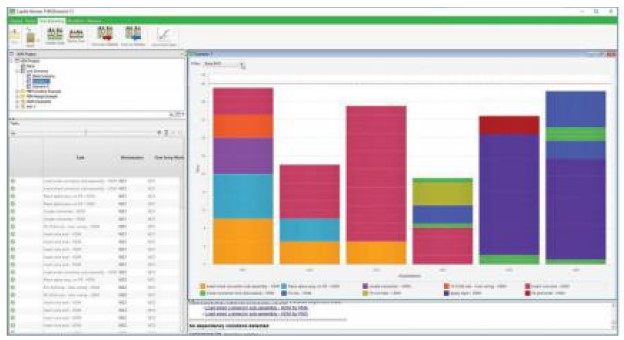
Quickly and accurately analyze multiple "what-if" scenarios to maximize production line efficiency. This is traditionally done manually based on experience. However, advanced solutions are now available to design multiple trade-off studies quickly, optimizing line efficiency. These tools can also provide guidance and real-time graphical feedback, identifying the earliest workstation that can perform tasks based on defined task and material dependencies (Figure 3). Modern tools can also instantly alert engineers to any inconsistencies in production line processes in a balanced view, while also showing detailed time differences for each workstation task.
10. Ready-to-Use Work Instructions for Every Stage of Assembly:
Finally, work instructions may take days or weeks to create, only to become obsolete due to errors or design changes. Today's tools can automatically generate work instructions and visual aids for wire harness assembly operators. This removes work instructions from the critical path for introducing new or changed wire harness designs, speeding up time to efficient production. Additionally, work instructions are generated from the same source data that has been verified, eliminating the need for data re-entry and ensuring accurate work instructions.
Conclusion:
As wire harnesses become more complex and timelines accelerate, wire harness manufacturers face increasing challenges. Traditional methods of seatbelt and manufacturing engineering will prove insufficient in the future, pushing manufacturers to evolve continuously to meet emerging challenges. An automated and integrated E/E system and wire harness engineering solution with strong data integrity throughout the development process will enhance manufacturers' ability to produce advanced wire harnesses on tighter timelines. This digital transformation is critical to growing revenue, improving profitability, and ensuring the future success of manufacturing companies in an increasingly competitive environment.
As companies digitize, solutions that can operate in a multi-domain environment will be most beneficial. Capital software is part of Siemens' x-enabled portfolio of digital industrial software, providing wire harness manufacturers with a digital twin that can interface with multi-discipline engineering teams to enhance collaboration and success. That's where tomorrow's wire harness manufacturing will take place.
Modern solutions enable today's wire harness manufacturers to offer and utilize:
- Complete, accurate, proven wire harness design.
- Reuse data through multiple individually styled diagrams of the same harness model.
- Optimum capabilities in component (production module) and formwork board design.
- Rule-based manual calculation synthesis and inventory of the entire manufacturing process.
- Automatically generated, highly graphical work instructions.
- Reduced response time to new or changed designs through automation and a continuous digital thread.
