
Maintenance methods of automobile wires, wiring harnesses and connectors
Jan 22, 2024
Wire repair
When a conductor is damaged and needs to be repaired, the correct measuring tool must be used to measure the diameter of the damaged conductor, following the requirements specified in the circuit diagram. The cross-sectional area of the replacement conductor must not be smaller than the specifications of the original conductor.
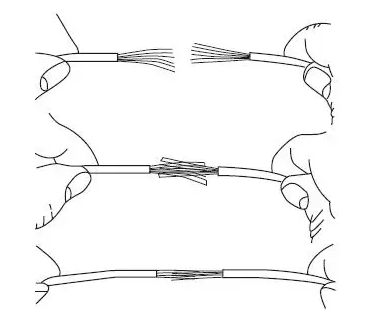
As shown in the figure above, the specific steps for connecting and disconnecting wires are as follows:
As shown in the figure above, the specific steps for connecting and disconnecting wires are as follows:
- Remove the negative cable from the battery.
- Place a heat shrink tube on one end of the wire. The length of the heat shrink tube should be sufficient to cover the repair section of the wire.
- Strip 2 cm of insulation from the wire end.
- Separate the core wires of the wires and then twist the two wires together.
- If necessary, use a soldering iron to solder the repair section of the wire.
- Slide the heat shrink tube over the repair section and heat it to seal it.
After the conductor repair is completed, it must be securely fixed to avoid damaging the insulation layer of the conductor.
CAN Bus Maintenance
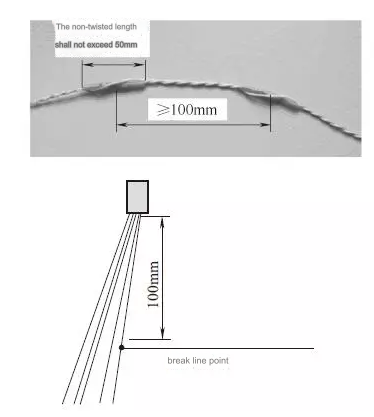
If the CAN wire is damaged or disconnected, the CAN bus needs to be repaired. When repairing the CAN bus, the disconnection point should be at least 100 mm away from the connector, and the distance between two repair points must be at least 100 mm. The untwisted length of the repair section must not exceed 50 mm; otherwise, the signal transmitted by the wire will be distorted.
Issues to Be Aware of When Repairing the Wiring Harness
During long-term use of automotive wiring harnesses, the outer covering is easily damaged, or wires may break due to corrosion or wear from exposure to water and oil. This requires the wires to be replaced, and the wiring harness to be rewrapped.
How to Make Your Own Wiring Harness (with pictures) ▼
When remaking your own wiring harness, having a wiring harness diagram makes the process very convenient. First, prepare the wires according to the specifications of the original wiring harness (wire diameter, length, color, etc.). Next, gather the wires that should be tied together and arrange them into shape according to the original layout of the wiring harness, leaving the specified length for branches and heads. Wrap the junction points of each branch and the ends of the wiring harness with tape to prevent loosening and tangling during the wrapping process. Then, wrap the entire harness with white gauze tape or plastic insulating tape. Finally, slide plastic tubes of different colors onto each wire head, and solder terminal blocks or various plug-in connectors. The wire harness wrapped with white gauze tape should then be coated with a layer of green paint on the gauze, and it can be used in the car after it dries.
How to Make Your Own Wire Harness (Without Pictures) ▼
The structures of imported and domestic automobile wiring harnesses are essentially the same, but wiring harness diagrams are often missing. When repairing, you may need to create a new wiring harness. If there is no dimensional reference, you can remove the old wiring harness and measure the length of each part. Alternatively, you can roughly measure the size directly on the car (usually from the front end to the rear).
When wrapping the wires, they should be arranged according to the original configuration of the wiring harness. The exposed parts should meet the specified length, and the joints should not have any exposed areas. Insulating sleeves should be added to the soldered areas and wrapped properly.
If the joints of any wires are not the original color, they should be covered with plastic tubes of the original color to facilitate identification. The connectors at the wiring harness and electrical equipment should be compatible. If the original connectors are still usable, they should be kept. If the original parts are no longer usable or are corroded, they should be replaced with new ones. If no new parts are available, the original parts should be thoroughly cleaned before reuse.
Installation of the Automobile Wiring Harness
When installing the automobile wiring harness, pay attention to the following:
- The wiring harness should be secured with circlips and trip pins to prevent loosening and wear.
- The wiring harness should not be pulled too tightly at corners or near parts that move relative to each other.
- When passing through holes or around sharp corners, use rubber, felt mats, or casings to protect the harness from wear that could cause grounding, short circuits, or even fires.
Each terminal block must be securely connected and provide good contact.
Maintenance of Connectors
When checking the voltage or continuity of the line, it is generally not necessary to disconnect the connector. Simply insert the two pins of the multimeter into the wire hole at the end of the connector to perform the check.
Maintenance of Ordinary Connectors ▼
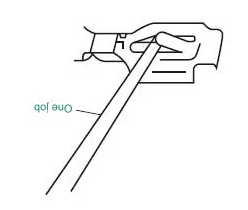
If you need to replace wires or remove connector terminals during repairs, start by separating the plug and socket. Use a special tool (or a small screwdriver) to insert into the wire hole at the end of the plug or socket. Pry up the locking flange of the terminal block, and then pull the wire out from the rear.
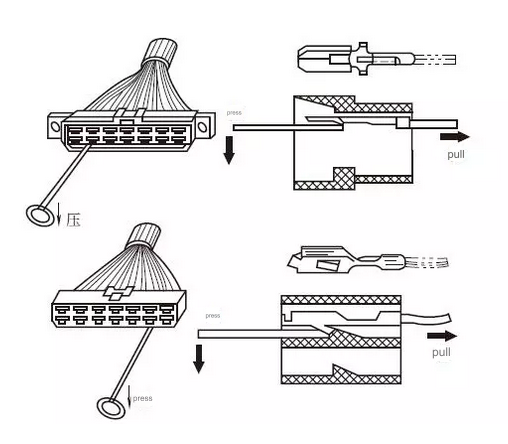
Before installing a new terminal block, first check whether the locking flange of the terminal block is normal. If not, adjust it as shown in the figure below.
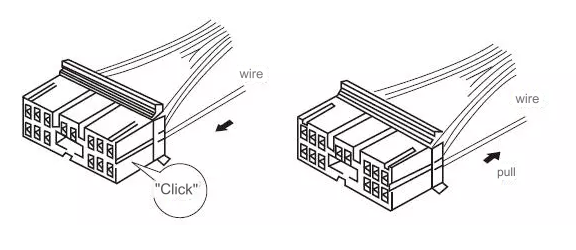
When installing, push the wire with terminal block in until the terminal block is locked, and then pull the wire back to confirm whether it is locked.
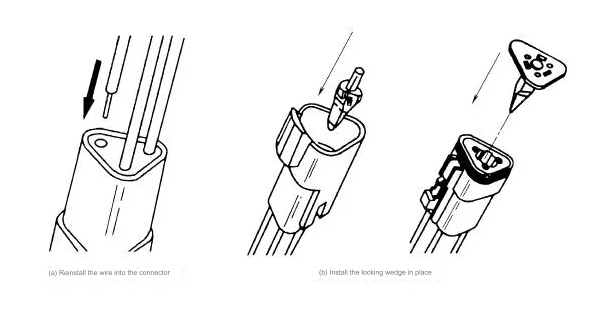
Inspection of connectors with locking wedge ▼
① Use needle-nose pliers to pull out the locking wedge directly.
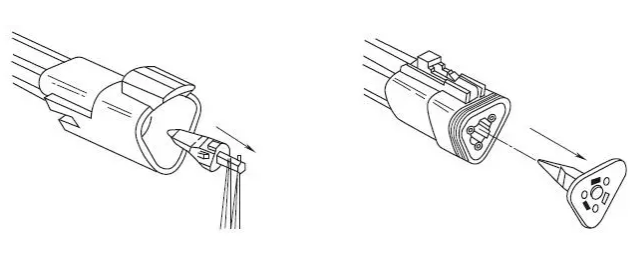
② Use a special tool to remove the locking piece from the contact pin, release the locking piece, and pull out the wire.
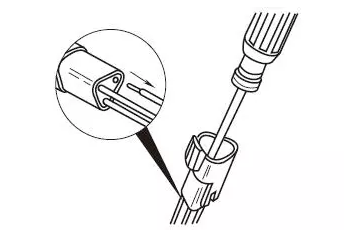
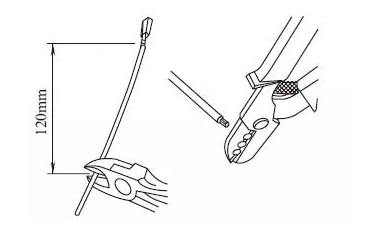
③ Cut off about 120mm of wires and terminals, and peel off 6mm of insulation.
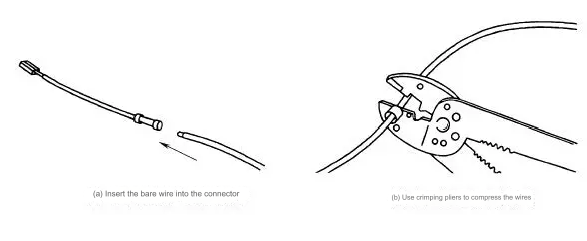
④ Insert the bare wire into the butt-type connector and use crimping pliers to compress the wire tightly.
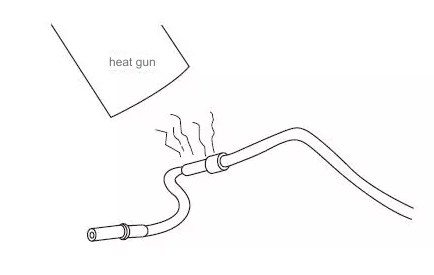
⑤ Put the heat shrink tube into the repair area of the wire, and use a hot air gun to heat and shrink the heat shrink tube.
⑥ Reinstall the wires and terminal blocks into the connector and install the locking wedge in place.