
How to connect the terminals? Terminal block specifications and models
Jan 20, 2024
Terminal blocks are common basic components in the electronics industry. They are primarily used for the effective transmission of intermediate media, such as signals and current. There are many types of terminal blocks, so how should we wire them?
- The terminals should be evenly distributed and closely spaced across the entire surface.
- Terminal blocks should not occupy the entire surface. There must be a gap around the edge of the board. The size of the gap depends on the size of the printed circuit board and the mounting method.
- Under normal conditions, all terminal components should be placed on the same side of the printed circuit board. If the top components are too densely packed, components with limited height and small heating bases, such as chip resistors, chip capacitors, and chip ICs, can be placed on the bottom layer.
- The terminal layout should not overlap vertically. A certain distance should be maintained between adjacent components to prevent collisions.
- To ensure the electrical performance of the terminal blocks, components should be placed on a grid and arranged either parallel or perpendicular to each other for a neat and orderly appearance. In general, components should not overlap, and they should be arranged compactly, with input and output components placed as far apart as possible.
- The installation height of the terminal block should be kept as low as possible. Typically, the component body and leads should not extend more than 5mm from the surface. If the height is excessive, the stability of the terminal block against vibration and impact will decrease, making it more prone to falling or colliding with adjacent components.
- The direction of the component axes should be determined based on the installation position and the condition of the printed circuit board's high-current terminals in the final assembly. Components should generally be aligned with the axis of larger components in an upright position within the entire machine. This improves the stability of components fixed to the printed circuit board.
To understand how to wire terminal blocks, we first need to be familiar with the wiring methods used for terminal blocks:
1.Screw Connection
Screw connection is a method of using screw terminal blocks. It is important to pay attention to the maximum and minimum wire cross-sections, as well as the maximum tightening torque allowed for screws of different sizes.
2.Soldering
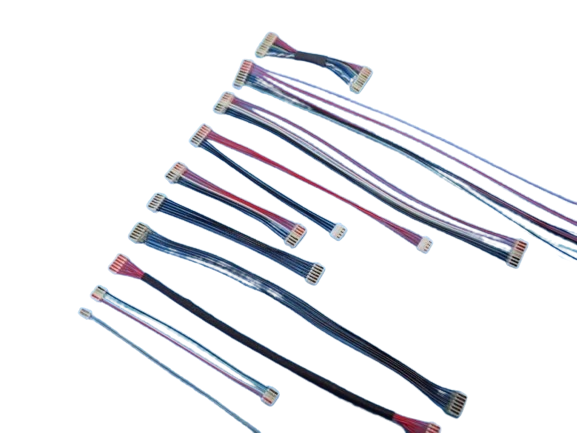
The most common form of connection is soldering. For a successful soldered connection, there must be metallic continuity between the solder material and the surface being soldered. For cold-pressed terminals, the most important factor is weldability. Common platings for the solder ends of terminal rings include tin alloy, silver, and gold. Reed contacts have welding tabs in various forms, such as punched, tabbed, or notched for common welding ends. Pinhole contacts often use drilled arc notches for common welding ends.
3. Crimping
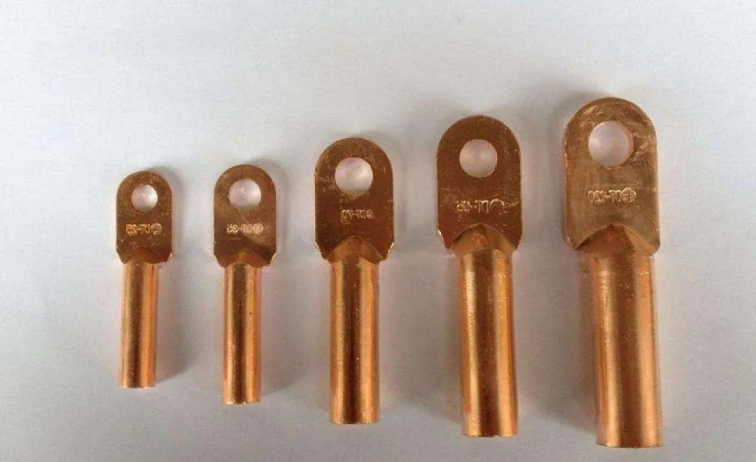
Crimping is a technique used to compress and displace metal within specified limits to connect conductors to contact pairs. A good crimp connection creates a metal-to-metal flow that causes both the wire and contact material to deform symmetrically. This type of connection is similar to a cold welding connection and can provide better mechanical strength and electrical continuity. It is also capable of withstanding harsher environmental conditions. Crimping is generally considered superior to soldering, especially in high-current applications where crimping must be used. Special crimping pliers or automatic or semi-automatic crimping machines are required for the crimping process. The conductor barrel of the contact pair should be properly selected according to the cold-pressed terminal specifications. It is important to note that crimp connections are permanent and can only be used once.
4. Wrapping
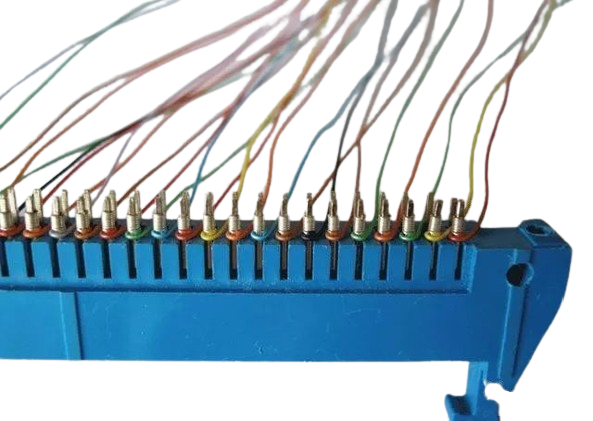
Wrapping involves winding the wire directly around an angled contact post. During the winding process, the wire is wrapped under controlled tension and pressed into place at the corners of the contact post to form a secure, airtight connection. Several requirements must be met when wrapping wires: the nominal wire diameter should fall within the range of 0.25mm to 1.0mm. When the wire diameter is no greater than 0.5mm, the elongation rate of the conductor material should be at least 15%. For wires with diameters greater than 0.5mm, the elongation rate of the conductor material should be at least 20%. Winding tools include winding guns and fixed winding machines.
5. Puncture Connection (Insulation Displacement Connection)
Puncture connection, also known as insulation displacement connection (IDC), is a terminal technology invented in the 1960s in the United States. It is known for its high reliability, low cost, and ease of use. IDC has been widely adopted in various printed circuit board terminal blocks and cold-pressed terminals, such as ring terminals. This method is suitable for ribbon cable connections, as there is no need to strip the insulation layer of the cable. The tip of the "U"-shaped contact reed of the terminal block penetrates the insulation layer, allowing the conductor to slide into the contact reed's slot and be securely clamped, creating a tight electrical connection between the cable conductor and the terminal reed. IDC requires only simple tools but must use cables with specified wire gauges.
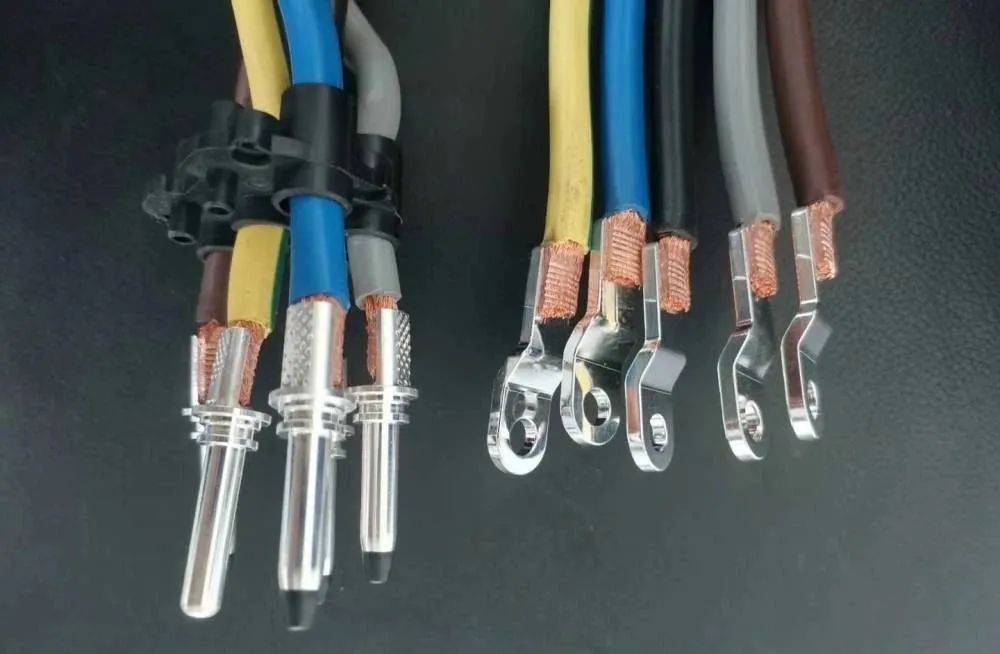
Terminal Block Models and Specifications
There are many types of terminal blocks, each with various specifications and models. To know the specific specifications and models, one must refer to the manufacturer's drawings and manuals.
The model of a terminal block typically uses a combination of English letters and numbers, or sometimes Pinyin letters, to denote the serial number, model, number of terminals, size, discharge current, etc.
General Rules for Terminal Block Models:
- The two terminals of a single component are distinguished by consecutive numbers. The odd-numbered terminal should be smaller than the even-numbered terminal, e.g., 1 and 2.
- Numbers are used to identify the middle terminals of a single component. It is best to use natural increasing order for the numbers. For example, 3, 4, 5, etc. The numbers for the middle terminals should be greater than those for the terminals on either side and should be marked starting from the smaller-numbered terminals. For instance, for a component with terminals 1 and 2 on either side, the middle terminals should be labeled 3, 4, 5, etc.
- If several similar components are grouped together, the terminals of each component can be marked as follows:
- a. Use letters before the numbers to distinguish the terminals on the sides and in the middle. For example, use U, V, W to label the phase terminals of equipment in a three-phase AC system.
- b. When phase identification is unnecessary or impossible, the terminals on the sides and in the middle can be distinguished by numbers with a dot separating them. For example, one component’s terminals can be marked 1.1 and 1.2, while another component’s terminals can be marked 2.1 and 2.2.
- c. The two terminals of each component are distinguished by consecutive numbers, where the odd-numbered terminal is smaller than the even-numbered terminal.
