
[Wire Harness] Assembly and Welding Wire Operation Instructions
Jan 27, 2024
Purpose
Guide the production line to perform wire welding operations correctly to ensure product quality and improve product yield.
Tools and materials
Tools used: soldering iron, heat gun, diagonal pliers, needle nose pliers, Phillips screwdriver, slotted screwdriver, blade.
Materials: cable, solder, heat shrink tube, 2KΩ, 1/4W color ring resistor.
Work procedure
01 Preparation
(1) Verify the production instruction sheet, refer to the electrical schematic diagram of the corresponding model, and carefully check the cable model and required plug accessories.
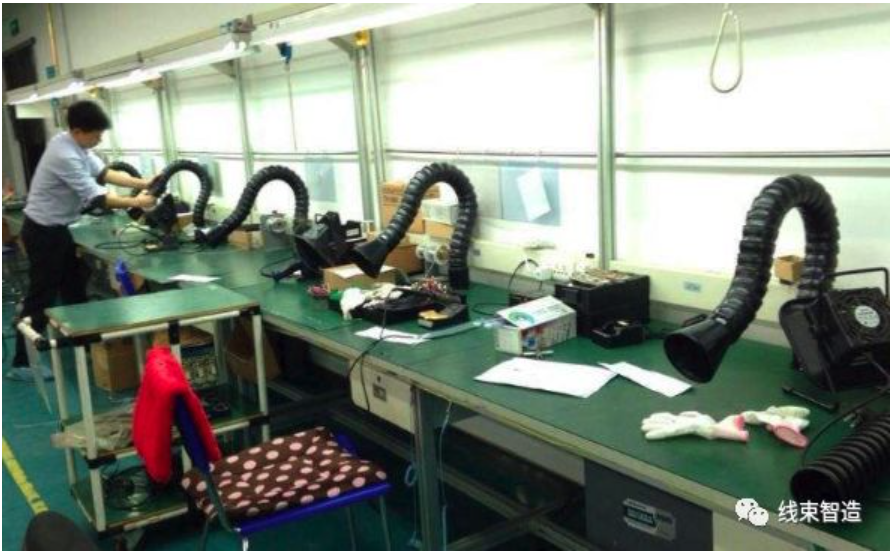
(2) Turn on the power of the soldering iron, lights, and exhaust fan.
02 Wire welding operation
(1) Refer to the list of electrical accessories and extension cords for the corresponding model, and cut the required cables to the appropriate length. Each type of cord must be marked and classified with adhesive tape.
(2) Each wire or cable must be covered with a heat shrink tube of appropriate size before welding.
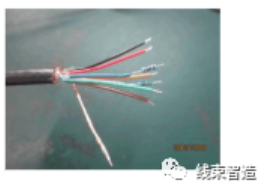
(3) The stripped length of the cable should be about 40mm. If there is a shielding layer, twist the shielding layer into one piece.
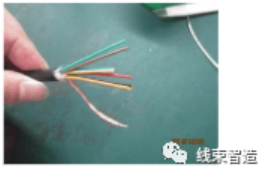
(4) The stripping length of each wire should be 2-3mm.
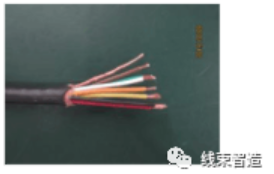
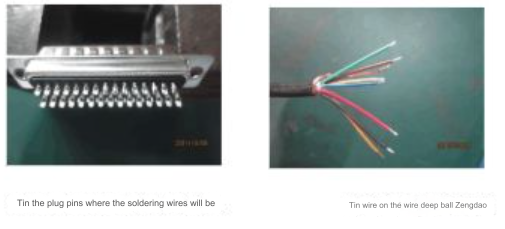
(5) Add solder to the welding positions (wires and plug pins) in advance. When adding solder, fix the wire or plug in place and apply a layer of solder quickly and evenly to ensure a solid weld.
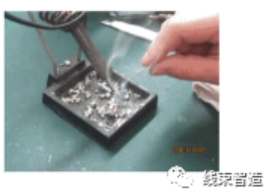
(6) Before welding, clean the soldering iron tip with soldering wire to prevent short circuits caused by welding slag on the tip.
(7) When welding servo or stepper driver IO lines, refer to the electrical schematic diagram and weld the 2KΩ, 1/4W color ring resistor to the corresponding line in advance.
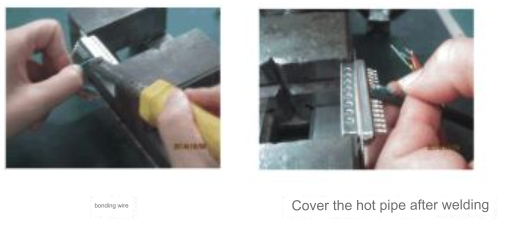
(8) During welding, fix the plug, hold the wire in one hand and the soldering iron in the other. Refer to the electrical schematic diagram, position the wire on the correct plug pin, and solder quickly with the soldering iron. Additionally, ensure that the solder joints are not too large to avoid short circuits or issues with inserting the heat shrink tube. After soldering a wire, cover it with heat shrink tubing to prevent short circuits when soldering adjacent pins.
(9) After welding is completed, gently pull the wire left and right to check for any false soldering
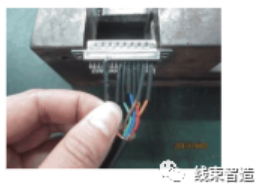
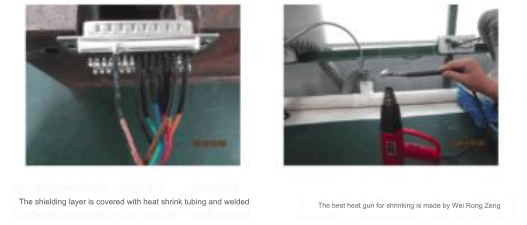
(10) For shielded cables, twist the shielding layer into one, cover it with a heat shrink tube, and shrink it properly to secure it to the plug. After all the solder joints are welded and self-checked, place the heat shrink tube over the solder joints and shrink it with a hot air gun.
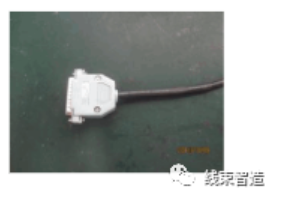
(11) When the plug has a shell, assemble the shell, label the functional wires, and categorize them.
03 Precautions
- When welding, pay attention to the arrangement direction of the solder pins on each plug.
- Each pin of the plug must not be short-circuited to any other pin, even if one of the pins is not soldered.
- The welding speed must be fast to prevent the plug from being damaged. Do not leave the soldering iron tip on the soldering point for too long.
- When welding the servo or stepper driver IO control lines, unless otherwise specified, both the pulse input line and the direction input line must be connected in series with a 2KΩ, 1/4W color ring resistor.
- When heat-shrinking the heat-shrinkable tube, keep it about 100mm away from the air outlet of the hot air gun, and do not heat it for too long.
- When the soldering iron is not in use for a long time, apply a little solder to the soldering iron tip and turn off the power to protect the tip.
- Be cautious of high temperatures when using soldering irons and heat guns to avoid burns.
- When the color of the wires in the cable changes, record and update it promptly.
- Operators and QC personnel must perform quality control throughout the product manufacturing process to ensure the quality of the finished product.
Welding Wire Inspection Standards
- Missing Soldering: Refer to the electrical schematic diagram. Ensure that no pins are unsoldered and that the 2KΩ, 1/4W color ring resistors are properly soldered.
- Disconnection: There should be no disconnections.
- Cold or Weak Soldering: The solder joint should be strong. If pulled lightly, the joint should not come off.
- Incorrect Soldering: The direction of the plug pins must be aligned properly. If the direction is not correct, the soldering is wrong.
- Poor Insulation: Excessive heat shrinkage should be avoided, as it may cause the heat shrinkable tube to burn. Also, ensure that the shielded wire is properly welded with the heat shrinkable tube.
