

There are many types of power cords, what are the common types?
Dec 01, 2023
1,General Rubber-Plastic Power Cord: Suitable for the connection and internal installation of power, lighting, electrical devices, instrumentation, and telecommunication equipment with an AC rated voltage of 450/750V and below.
2,Rubber-Plastic Soft Power Cord: Primarily suitable for connecting medium and light mobile appliances (household appliances, power tools, etc.), instrumentation, and power lighting. The working voltage is AC 750V and below, with most cords rated at AC 300°C.
3,Shielded Insulated Power Cord: The performance requirements for shielded power cords are essentially the same as those for similar unshielded power cords.
4,General Rubber Power Cord: This type of rubber power cord has a wide range of applications and is suitable for various electrical equipment that requires mobile connections, including connections for electrical equipment used in different industrial and agricultural sectors.
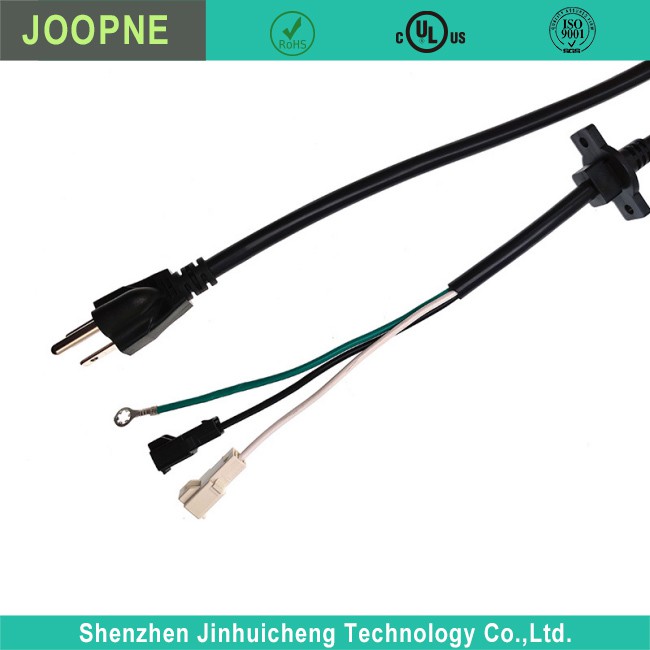
5,Mining Rubber Power Cord: Mainly used for special rubber power cords designed for surface and underground equipment in the mining industry. This includes rubber power cords for mining electric drills, communication and lighting equipment, mining and transportation, cap lights, and power supplies for underground mobile substations.
6,Seismic Rubber Power Cord: Primarily used for land-based applications. Features include a small outer diameter, lightweight, soft, wear-resistant, bend-resistant, weather-resistant, water-resistant, anti-interference, and good insulation performance. The core wire is easily identifiable, and it is convenient for complete set organization.
7,Twisted Pair Power Cord: When it comes to twisted pair cables, the most important performance indicators for users include attenuation, near-end crosstalk, impedance characteristics, distributed capacitance, DC resistance, and more.
8,Control Signal Rubber Power Cord: Used for control and measurement systems, requiring the rubber power cord to work safely and reliably. The working current for signal power cords is generally below 4A. For control power cords used in main equipment circuits, the current is slightly higher, so the cross-section can be selected based on the line voltage drop and mechanical properties.
