
How does the cable quality affect the LVDS signal?
Dec 22, 2025
Yo, what’s up tech enthusiasts! I’m a supplier of LVDS cables, and today I wanna talk about how cable quality can mess with LVDS signals. LVDS, or Low-Voltage Differential Signaling, is a key player in high-speed data transfer, especially in display applications. It’s used in laptops, monitors, and all sorts of cool gadgets. But here’s the deal: not all LVDS cables are created equal, and the quality of the cable can have a huge impact on the signal.
Let’s start with the basics. LVDS works by sending data over two wires that carry opposite signals. The difference between these two signals is what gets interpreted as data. This differential signaling method is great because it helps reduce electromagnetic interference (EMI) and noise. But when you’ve got a low-quality cable, all that goodness can go out the window.
One of the main factors affected by cable quality is signal attenuation. Attenuation is just a fancy word for the loss of signal strength as it travels through the cable. High-quality cables are designed to minimize this loss. They use better conductors, like high-purity copper, which has low resistance. This means the signal can travel further without losing too much strength. On the other hand, cheap cables might use lower-quality conductors, or they might be too thin. This leads to more resistance, and the signal weakens quickly. When the signal is too weak, the receiving end might not be able to interpret it correctly, resulting in data errors or a poor-quality display.
Another big issue is impedance matching. Impedance is like the electrical "resistance" of a cable to the flow of the signal. LVDS systems are designed to work with a specific impedance, usually around 100 ohms. A good-quality cable will have a consistent impedance throughout its length. This ensures that the signal travels smoothly without any reflections. Reflections occur when the impedance changes suddenly, like when the signal hits a part of the cable with a different impedance. These reflections can interfere with the original signal, causing distortion and errors. Low-quality cables often have inconsistent impedance, which can lead to all sorts of problems.
Now, let’s talk about crosstalk. Crosstalk is when the signal in one pair of wires interferes with the signal in another pair. In an LVDS cable, there are usually multiple pairs of wires carrying different signals. High-quality cables are designed to minimize crosstalk. They use proper shielding and twisting techniques. The shielding helps block external electromagnetic interference, and the twisting of the wires helps cancel out any interference between the pairs. Cheap cables might have poor shielding or improper twisting, which can result in crosstalk. This can cause data corruption and a decrease in the overall performance of the LVDS system.
Let’s take a look at some of the products we offer. We’ve got the 51Pin LVDS Cable. This cable is made with high-quality materials to ensure minimal signal loss and excellent impedance matching. It’s perfect for applications that require high-speed data transfer and a reliable connection. Whether you’re working on a large monitor or a high-end laptop, this cable will get the job done.
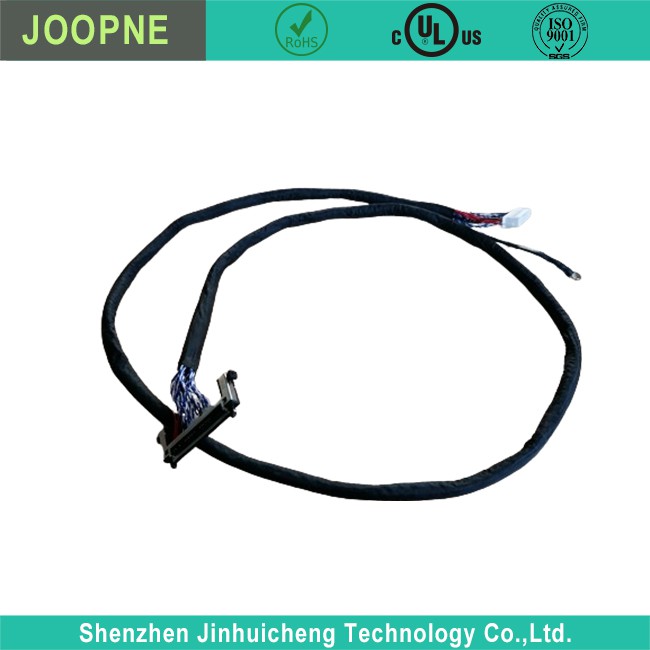
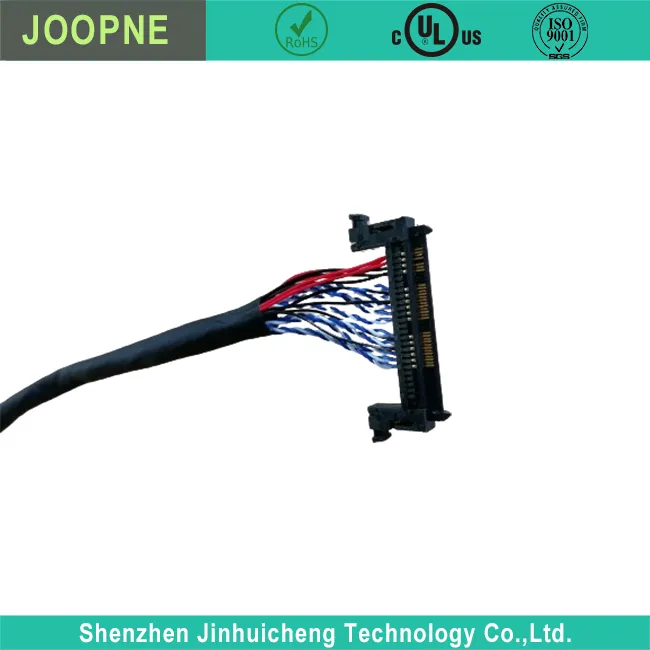
Then there’s the NP14G-S Laptop Screen Cable. This cable is specifically designed for laptops. It’s flexible and durable, making it easy to install and use. The high-quality construction ensures that the signal from your laptop’s graphics card to the screen is clear and strong. You won’t have to worry about any display issues like flickering or color distortion.
And for those of you in the testing industry, we have the LVDS FPC Screen Panel Test Cable. This cable is used for testing screen panels. Its high precision and reliability are crucial for accurate testing results. The quality of this cable ensures that the test signals are transmitted correctly, giving you confidence in your test data.
So, how can you tell if a cable is high-quality? Well, there are a few things to look for. First, check the packaging. A good-quality cable will usually come with detailed specifications about its impedance, attenuation, and other important parameters. You can also look at the construction of the cable. High-quality cables often have a thicker outer jacket and better shielding. The connectors should be well-made and fit snugly.
In conclusion, the quality of the LVDS cable matters a lot. It can affect the performance of your entire system, from the clarity of your display to the accuracy of your data transfer. As a supplier, we’re committed to providing high-quality LVDS cables that meet your needs. If you’re in the market for LVDS cables, don’t just go for the cheapest option. Invest in a good-quality cable, and you’ll save yourself a lot of headaches in the long run.
If you’re interested in our products or have any questions, feel free to reach out to us for a procurement discussion. We’re here to help you find the best LVDS cable solution for your specific requirements.
References
- "High-Speed Signal Propagation: Advanced Black Magic" by Howard Johnson and Martin Graham
- "Electromagnetic Compatibility Engineering" by Henry W. Ott
